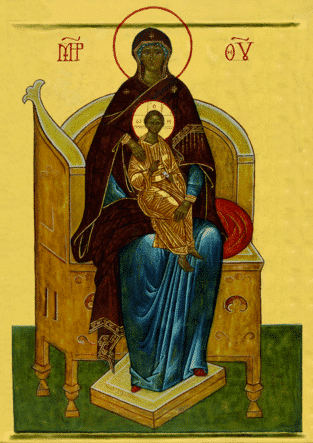
This icon is inspired by a fresco by Master Dionysius dating from the early 16th century, at the Ferapontov Monastery in the Vologda region. This type of representation is ancient: the oldest known example dates from around 527 and is found in the Catacomb of Commodilla in Rome. The Mother of God sits on a throne, like an empress. She is clothed in a blue tunic and the maphorion dark red, where three gold stars shine, symbols of her perpetual virginity—before, during, and after childbirth. She wears traditional red slippers. The Child is seated on her lap as if on a throne. His face is grave and thoughtful: He is indeed Eternal Wisdom made flesh. He is dressed like an adult, in a yellow-ochre imperial tunic highlighted with gold, a symbol of His divinity. He blesses with His right hand and holds the scroll of the Gospels in the other. This Virgin in Majesty, “Throne of Wisdom,” shares its hieratic posture, gestures, and features with the sculptures of ancient paganism. However, what is expressed here is the dogma of Divine Motherhood, proclaimed at the Council of Ephesus (431): since that time, she has sat as a sovereign in the apses of churches, with all the honors of a Byzantine empress. Saint John Damascene seems to have had this image before his eyes when he wrote: “Her hands carry the Eternal One, and her knees are a throne more sublime than the Cherubim; she is the royal throne upon which the Angels contemplate, seated, their Master and Creator.”